Monday, August 12, 2013
The Kids Will Surely Bounce off the Walls With These!--Sandi
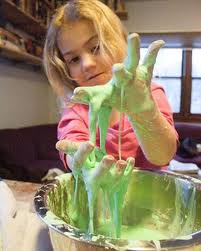
HOMEMADE BOUNCY BALLS!
(NO KIDDING! Just like out of the gumball machine! great to do with the kids...or FOR the kids!)
2 cups
Measuring spoons
A stir stick
2 tbsp hot water
1/2 tsp borax
1 tbsp glue
1 tbsp corn starch
Food coloring (optional)
Pour the water and borax into the first cup and stir the mixture until it is dissolved.
Pour the glue, cornstarch and food coloring into the second cup and mix. Then add the mixture from the first cup into the second cup.
Let the ingredients sit for 15 seconds then stir.
Once the mixture becomes difficult to stir, scoop it out of the cup, and roll into a ball. Enjoy!!!
Geometry and Art--A Great Pair!--Thanks Priscilla!
These activities could be utilized for a variety of grade levels and work time
This website posts a variety of patterned, non-representational art, which they call "tangles", I think it could be used to fill in designs for geometrical shapes and a variety of designs related to math...
<http://tanglepatterns.com/organize-your-patterns>
Students could create their own personal logos. Businessmen and businesswomen in the making at AEA!
Bubbles, Balloons, and Bridges with Brittney!
Balloon
Blast off
Materials-
Balloons
Tape
String
Straws
Procedure-
Try to have the balloon hit a target across the room using
these materials.
Balls and
Ramp
Materials-
Balls and Ramp
Marbles
Paper towel roll
Construction paper
Tape
Stairs
Procedure
- Try to make a clock that measures
exactly 10 seconds.
- The only materials you can use are
marbles, paper towel rolls, construction paper, tape, and a flight of
stairs.
If
the marble gets to the bottom of the stairs in exactly 10 seconds, without any
help from you, you've mastered our challenge!
Bubble City
Materials-
Bubble
solution
Straws or
wire
Procedure-
Think of
ways to make the soap bubbles square using the straws or wire.
Straw Bridge
Materials-
Straws
Paper clips
Something to
test strength
Procedure-
Build the craziest designed bridge using only straws and paper clips
that can span 30 centimeters and support the most weight. You first have to
think of a plan of how you are going to build your structure.
Sunday, August 11, 2013
Do You Believe in Magic. . . APPLES?--Lauren
Magic Mixture--Apple Dunk
YOU WILL NEED
- An apple
- Half of a lemon
- Shallow bowl
- Water
- Knife (ask a parent for help)
Peel and slice an apple. Cover one slice with water in a shallow bowl. Sprinkle a second slice with the juice of half a lemon. Leave another slice exposed to the air. Wait about an hour, then compare. The slice with nothing on it turns brown.
WHY?
When an apple is cut open, chemicals inside the apple combine with oxygen from the air to form a brown coating. The coating keeps oxygen from getting deeper into the apple. Water protects the first slice from oxygen in the air so it stays white. Vitamin C in the lemon juice binds with oxygen, keeping oxygen away from the second slice, so it stays white the longest.
Lauren's Personality is--MAGNETIC!!
YOU WILL NEED
- A piece of paper
- A paper clip
- Thread
- Clear tape
- Scissors
- A strong magnet
Cut a paper kite shape about three inches long and attach a paper clip to one corner. To the opposite corner, tape a piece of thread about eight inches long. Tape the other end of the thread to a flat surface. Use a strong magnet to pick up the paper clip and extend the string to full length. Hold the kite between your fingers and slowly move the magnet away from the paper clip. When you release the kite, it “flies,” unattached to the magnet.
WHY?
Magnets have a magnetic field, an invisible force that attracts some kinds of metal. Metal objects within the magnetic field do not have to touch a magnet to be pulled by magnetism.
Dunking Oreo's in this Milk Would be FUN!!!--Airanne
Pour enough milk in the dinner plate to completely cover the bottom to the depth of about 1/4 inch. Allow the milk to settle. Add one drop of each of the four colors of food coloring - red, yellow, blue, and green - to the milk. Keep the drops close together in the center of the plate of milk. Find a clean cotton swab for the next part of the experiment. Predict what will happen when you touch the tip of the cotton swab to the center of the milk. It's important not to stir the mix. Just touch it...
http://www.stevespanglerscience.com/lab/experiments/milk-color-explosion
Saturday, August 10, 2013
WOW MAYA! -- The ideas are flowing here!
#1
Grade Level: 4th-7th Type: Physics
Objective:
Make a hovercraft that can stay afloat using air power.
Research Question:
How does a flat surface move differently along another one when there’s air flowing under it?
Materials:
- Old CD
- Sports cap (pop-up type) from a disposable water bottle
- Glue
- Small or medium-sized balloon
Experimental Procedure:
- Use a CD that nobody wants to keep; it will get wrecked!
- Glue the sports cap to the CD so that the bottom of it is centered over the hole in the CD. Make sure it’s well-glued all the way around, and the sports top opens and closes easily.
- Wait for the glue to dry completely. Depending on the type of glue, you might have to leave it to dry overnight.
- Close the top of the sports cap and put the CD flat-side-down on a tabletop. Blow up the balloon and pinch the neck shut so no air gets out. Carefully stretch the neck of the balloon around the closed sports top so the part you drink out of is totally covered. There’s your hovercraft!
- Now put the hovercraft on a flat surface, like a table, and give it a little push to see how far it goes.
- Holding the hovercraft down, pull open the sports cap with the balloon still on it. Do this carefully—make sure the cap doesn’t come unglued!
- Now give the hovercraft another little shove and watch it go! What just happened? The air from the balloon is flowing through the spout now; when the CD was on the table with no air flow, the friction between the two flat surfaces kept it from going far. With air flowing between them, there’s a lot less contact between the surfaces and therefore a lot less friction—nothing to stop the hovercraft from really going!
Terms/Concepts: Friction, air pressure
References: Phineas and Ferb Science Lab, published by Scholastic, Inc., pp. 30-31 (2011).
#2
Grade Level: K-6th Type: Biopsychology/Sensory Perception
Objective:
Explore and compare the accuracy of the senses of smell and hearing.
Research Question:
How accurately can I identify sounds using only my sense of hearing? How accurately can I identify objects using only my sense of smell? Which of these senses is more accurate?
Materials:
- Computer to play .wav files of recorded sounds (I have several)
- Sound stimuli should include common sounds that are dissimilar from each other, such as the sound of water, breaking ice, footsteps, fire, wind, etc.
- Name the files with numbers, so they are named innocuously. In this way, participants can play the files themselves.
- Several small containers for the scent items
- Scent stimuli should include common scents that are dissimilar from each other, such as fresh fruit (pineapple, lemon, strawberry), and common environmental items such as a pine cone, soap, a flower, etc.
- Using Starbucks cups (for hot drinks) with lids work well. Place the scent item in the cup and place crumpled paper on top of the item before affixing the lid. Participants should be told not to handle the cups.
- Label each cup with a number.
- Worksheet to record, tally, and analyze results
Experimental Procedure:
- Participants listen to, or smell, each stimulus and record their answers on their worksheet
- The worksheet asks them to reason/explain/describe why they believe their answer to be true.
- When done, they check their answers against the key, and assign a numeric value to their correct and incorrect answers.
- Once values are assigned, they compare their sense of smell to their hearing and discuss why they think they got the results they did.
- The worksheet then asks them to brainstorm – how might knowing this help them in class, at home, or in life?
- Finally, they need to add their total score and post it on the white board (left side if hearing their hearing was better, right side if their sense of smell was better)
- OPTIONAL: At the bottom of the board, write advice to teachers (for example, “I don’t hear very well, talk less”)
References: I created this one.
Janice is FULL of great ideas!
Origami
http://www.origami-instructions.com/index.html
Test out a Parachute!
http://www.sciencekids.co.nz/experiments/freefall.html
Oobleck (Corn starch and H20) - Non -Newtonian fluid....States of Matter
http://www.origami-instructions.com/index.html
Test out a Parachute!
http://www.sciencekids.co.nz/experiments/freefall.html
Oobleck (Corn starch and H20) - Non -Newtonian fluid....States of Matter
Sandi MATH/ART
Fun way to talk about area. Kids could make self-portraits, portraits of their friends, made up creatures, or even their favorite AEA teachers!
Sandi--ART
Here is an idea for a project that I found. I though that it would be a nice idea for our students to create a collaborative piece of art to put in our new building.
http://pinterest.com/pin/482940760011671435/
Sandi--ENGINEERING
Since we are the Einstein Rockets, wouldn't it be great to make Rocket Cars?
http://pinterest.com/pin/482940760011693300/
Scott shares. . . SCIENCE
Easy to do with a lump of clay that sinks until you engineer a buoyant hull. Aluminum foil is another good material.
From Alyssa--SCIENCE
Since it's still summer, how about experimenting with the properties of water. We can engineer boats, decorating them with paint that we've mixed ourselves and enter them in different events (buoyancy, water displacement, fastest ways to propel/move).--Alyssa
ALL POSTS WILL NOW BE ON HOME PAGE
We seem to be having major technical difficulties, so from now on, all posts will be on the home page. I am deleting the extra pages, as they are not allowing me to put multiple posts. So sorry for any inconvenience. I truly appreciate your patience!
Sandi
Sandi
Thursday, August 8, 2013
Welcome to Our Blog
![]() |
| AEA Elementary Staff--Richard Rioux Park, August 4, 2013 |
Welcome to our blog. This blog is set up for us to use as a place to brainstorm and develop curriculum for our STEAM camp.
As you can see at the top of this page, there are tabs for each of the different elements of a STEAM curriculum. For you to share an idea that you might have, simply click on the appropriate tab, and type away in the comments section!
You can put in hyperlinks, photos, videos, and so much more. Please feel free to ask me if you have any questions.
Be sure to click on the right hand side to follow the blog. That way you will get email updates of the posts that we all share.
Sandi
Subscribe to:
Posts (Atom)